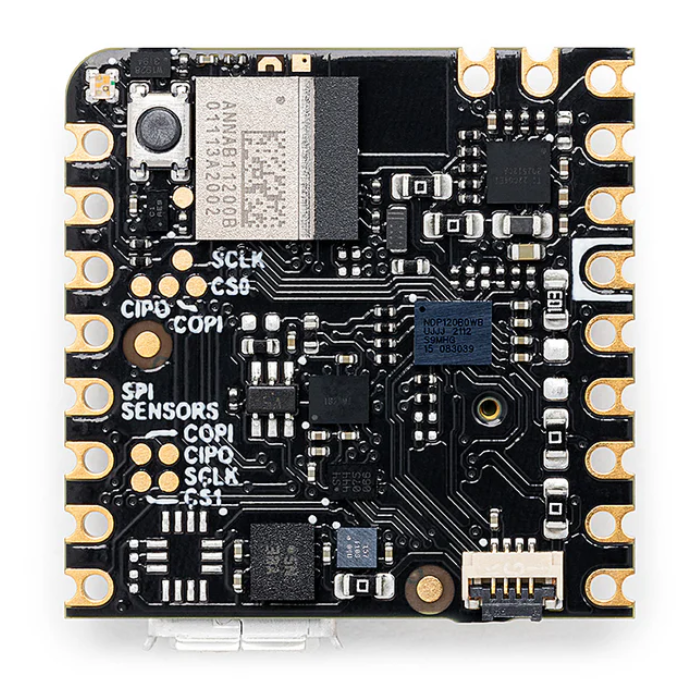
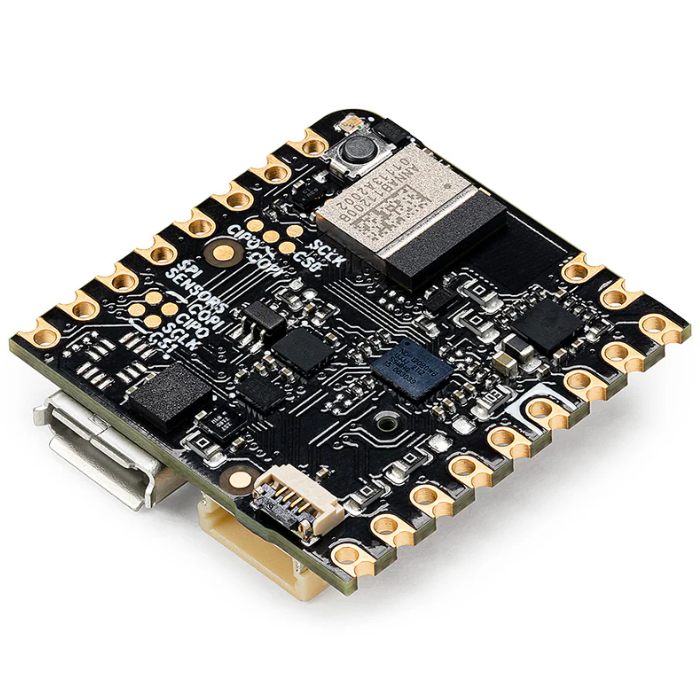
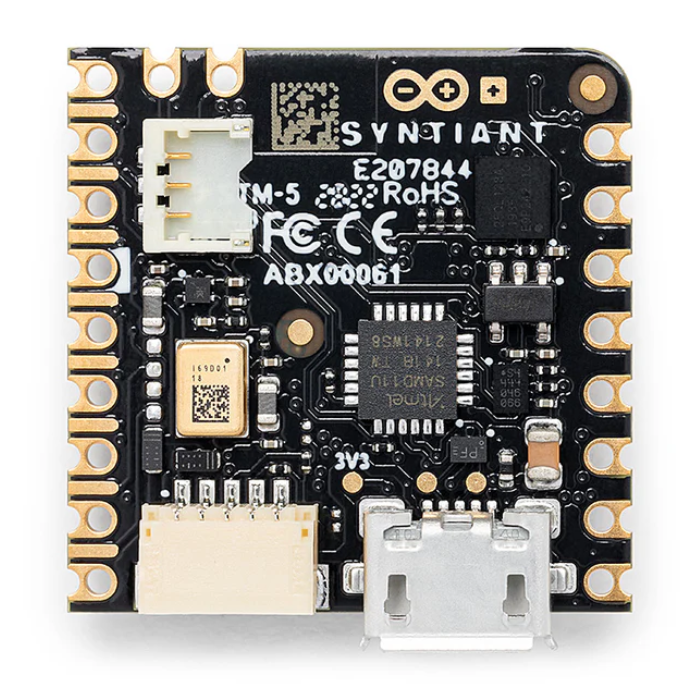
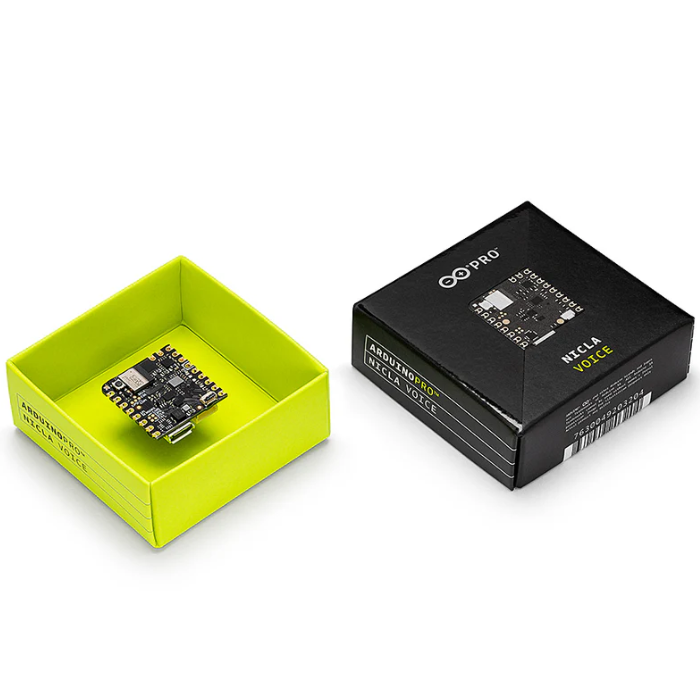
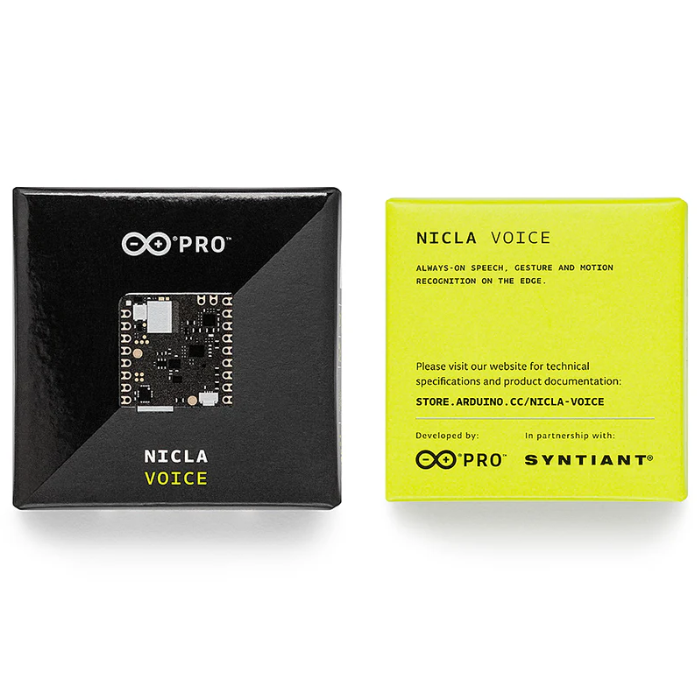
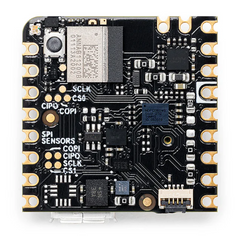
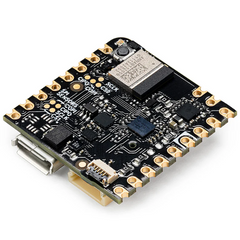
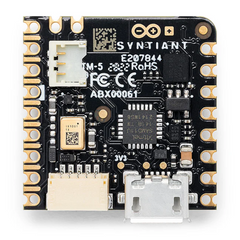
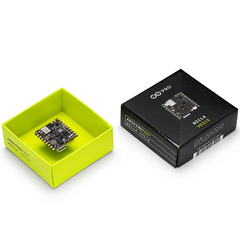
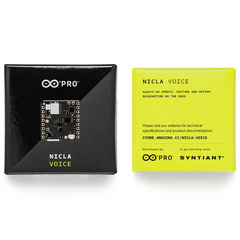
The Official Arduino Nicla Voice is a compact, high-performance board measuring just 22.86 x 22.86 mm, designed to enable always-on speech recognition directly at the edge.
At its core is Syntiant’s powerful NDP120 Neural Decision Processor, which supports multiple AI algorithms using advanced, bio-inspired machine learning to automate complex tasks.
This Arduino microcontroller is equipped with a rich suite of sensors including a microphone, a 6-axis smart motion sensor, and a magnetometer, making it perfect for applications like predictive maintenance, gesture or voice recognition, and contactless interaction.
With built-in Bluetooth Low Energy (BLE) connectivity, it seamlessly integrates with existing systems and is fully compatible with the Nicla, Portenta, and MKR product families.
Its ultra-low power consumption allows for continuous, always-on operation—even when powered by a small battery—making it ideal for wearable devices or retrofitting into existing machinery. Nicla Voice brings edge AI and voice recognition to the forefront, combining power and efficiency in a remarkably small package.
Features:
Neural Processor – Powered by Syntiant NDP120 for efficient on-device AI.
Compact Size – Just 22.86 x 22.86 mm, perfect for wearables and embedded use.
1. How to get started with the Arduino Nicla Voice Development Board?
To begin with the Arduino Nicla Voice, you should connect it to your computer via USB and install the necessary board package in the Arduino IDE. Once configured, you can start exploring its onboard sensors and voice recognition capabilities for smart projects. The compact form factor makes it perfect for space-constrained applications.
2. How to use the voice recognition features on the Arduino Nicla Voice?
The Nicla Voice Board is equipped with an onboard microphone and AI capabilities that enable speech and sound detection. You can use Arduino libraries or Edge Impulse to train custom models for keyword spotting and noise classification. This allows you to create voice-activated controls or audio event detection systems.
3. How to connect the Arduino Nicla Voice to other boards or sensors?
You can integrate the Arduino Nicla Voice with other Arduino boards like the Portenta or MKR series using I2C or SPI communication. This allows you to build advanced IoT or AI-powered systems that combine voice input with other sensor data. The standardized protocols ensure reliable data exchange across multiple devices.
4. How to power the Arduino Nicla Voice Board?
The Nicla Voice Development Board can be powered via USB or an external power source through its pin headers. Its compact and low-power design makes it ideal for portable and battery-operated AI voice projects. The efficient power management extends runtime in mobile deployments.
5. How to deploy AI models on the Arduino Nicla Voice?
You can train custom audio or sensor-based AI models on platforms like Edge Impulse and deploy them on the Nicla Voice Board. Its integrated nRF52832 microcontroller efficiently handles real-time inference for voice recognition and environmental sound analysis. The on-device processing ensures low latency and enhanced privacy for your voice applications.
The Arduino Nicla Voice is a compact development board designed for voice recognition and sound-based AI applications, enabling local audio processing in low-power IoT projects. You can use it to build systems that respond to spoken commands or detect specific sounds without relying on cloud services. Its small size makes it ideal for embedded and portable devices.
2. What makes the Nicla Voice board unique?
The Nicla Voice board stands out with its edge AI capabilities, allowing it to run machine learning models for keyword detection, noise classification, and sound recognition directly on the device. You get real-time inference with minimal latency and no internet dependency. This on-device processing enhances privacy and responsiveness.
3. Can the Arduino Nicla Voice be used in IoT projects?
Yes, the Arduino Nicla Voice integrates seamlessly with other Arduino boards and cloud services, making it perfect for IoT applications that use voice interaction or audio triggers. You can connect it to sensors, actuators, or gateways for smart automation. It supports both standalone and networked deployment scenarios.
4. How does the Nicla Voice support AI processing on-device?
The Nicla Voice board features a powerful nRF52840 microcontroller with sufficient RAM and flash to run lightweight neural networks for voice recognition and audio analysis. You can deploy trained models using TensorFlow Lite for Microcontrollers, enabling edge AI without cloud connectivity. This ensures faster, more secure, and reliable performance.
5. What types of projects can be built with the Arduino Nicla Voice?
You can use the Arduino Nicla Voice for smart assistants, industrial sound detection, noise monitoring, and AI-driven IoT projects requiring real-time audio analysis. Build voice-controlled devices, equipment fault detection systems, or environmental noise loggers. Its on-device AI processing makes it ideal for applications demanding low latency and data privacy.
This product comes with a 1-year manufacturer warranty from the date of purchase, covering manufacturing defects only.
Warranty Void If:
The product shows signs of physical damage, mishandling, exposure to water/moisture, fire, natural calamities, unauthorized repairs, improper storage near heat or direct sunlight, or alteration in any way.
The module is working fine i wished you guys had a soldered one and i think you missed the anntena for this module so make sure to provide one with this module








 Chat
Chat


