



 Chat


I am highly impressed with the service. The support team resolved my print issue swiftly, and the delivery was both fast and securely packaged. The final print is of outstanding, A1 quality.
FlySky FS-CT6B 6ch 2.4GHz Transmitter & FS-R6B Receiver


Robocraze BEST PRICE GUARANTEED
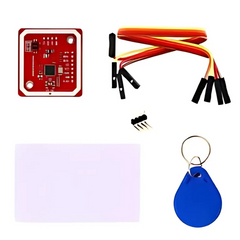
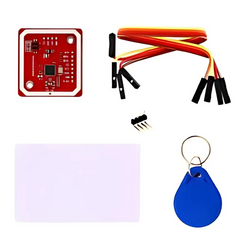
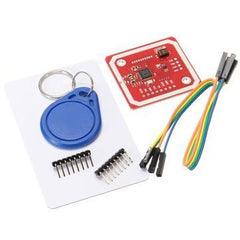
PN532 NFC-Near Field Communication RF-ID V3 Module
Let us know!
We'll try to match the price for you
For Best Price Contact on WhatsApp for bulk discounts!
Or Fill the Form Below

Couldn't load pickup availability

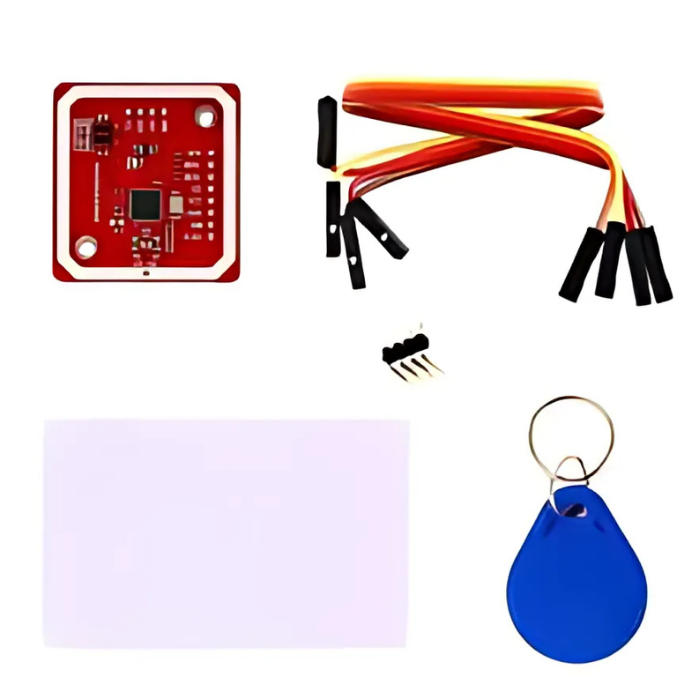
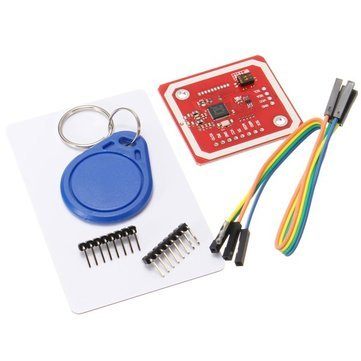
NFC technology was derived from RFID and allows users to connect to other devices, make payments, send media and files, and use NFC tags, easily the most creative use case for the technology. You can create an NFC scanner app for practically anything, making NFC app development extremely popular.
NFC technology provides a simple method of contactless communication between gadgets in close proximity. An NFC tag can share and link to information including web pages, social media, customer loyalty platforms, and more.
You can also leverage NFC to open doors secured with contactless locks and log on to computers. All of these actions have something in common: they invoke an action based on you placing your phone (or any other NFC-enabled device) near the thing you want to interact with or read.
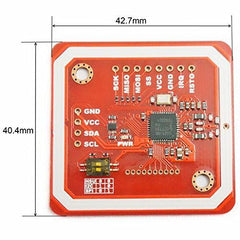
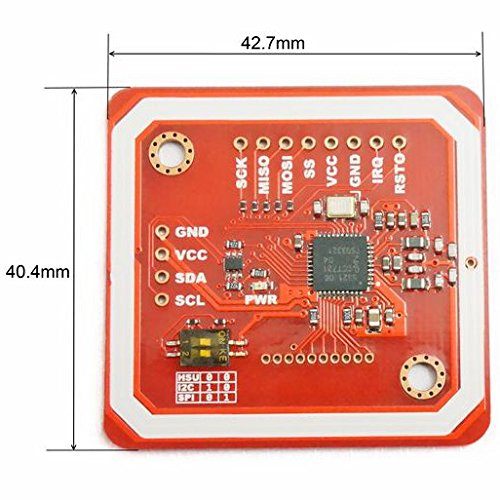
The PN532 is a highly integrated transmission module for contactless communication at 13.56 MHz including microcontroller functionality based on an 80C51 core with 40 Kbytes of ROM and 1 Kbytes of RAM. The PN532 combines a modulation and demodulation concept completely integrated for different kinds of contactless communication methods and protocols at 13.56 MHz with an easy-to-use firmware for the different supported modes and the required host controller interfaces.
The primary uses of NFC are:
The PN532 NFC RFID reader is highly versatile, supporting three communication protocols. Use the onboard DIP switches to select your preferred mode before connecting to your microcontroller:
(Pro Tip: Always power off the module before changing switch positions.)
While both are popular 13.56MHz modules, the PN532 NFC module is significantly more advanced than the RC522. The RC522 is a basic RFID reader limited to MIFARE cards and SPI communication only. In contrast, the PN532 supports full NFC protocols (including peer-to-peer and card emulation), works with a wider variety of tags, and offers three interface options (I2C, SPI, HSU), making it the ultimate choice for flexible NFC module Arduino projects.
| Interface | Support I2C, SPI, and HSU |
| Reading Distance | 5cm~7cm |
| Dimensions | 11 x 9 x 5cms |
| Weight | 50 grams |
NFC has become increasingly popular in recent years. NFC is supported by almost all high-end phones on the market. NFC technology is based on RFID and allows users to connect to other devices, make payments, exchange media and files, and use NFC tags, which is by far the most creative application of the technology. NFC scanner apps may be made for almost anything, making NFC app creation incredibly popular.
The PN532 NFC RF-ID V3 module can be used in the following applications below: Connect electronic devices, such as wireless components in a home office system or a headset with a mobile phone. Access digital content, using a wireless device such as a cell phone to read a “smart” poster embedded with an RF tag. Make contactless transactions, such as payment, access, and ticketing, are possible.
Though the majority of the available libraries (for PN532) are primarily focused on the Arduino Mega, the Uno is also preferred because it is more comfortable for a beginner. To complete the test setup, you only need an Arduino board in addition to the NFC RFID module.
The PN532 is a full-featured NFC/RFID controller that supports 13.56MHz NFC protocols (read/write, peer-to-peer, card emulation) and offers I2C, SPI, and UART interfaces. The RC522 is a legacy RFID reader limited to MIFARE cards and SPI only. For modern IoT and Arduino projects, the PN532 is the recommended upgrade.
Yes, this module is fully compatible with Arduino (Uno, Nano, Mega) and ESP32 development boards. It operates at 3.3V/5V logic levels, making it plug-and-play with our standard jumper wires and microcontrollers.
Very good quality
I recently purchased the PN532 NFC – Near Field Communication RFID V3 Module from Robocraze, and as always, I’m satisfied with the quality and service. The module works perfectly and was well-packed. Delivery was on time, and I appreciate the consistency from Robocraze — every time I order, I get genuine and well-tested components. Great experience overall!
PN532 NFC-Near Field Communication RF-ID V3 Module
It's a great deal for the price, offering dependable NFC connectivity at an affordable cost.
Nice and Brilliant Product
Thanks for subscribing!
This email has been registered!
| Product | SKU | Description | Collection | Availability | Product Type | Other Details |
|---|
It is Amazing and great item in this price
Veri usefull and cheap price from other shopping site, I use this module many project. Thank you robocraze
I am highly impressed with the service. The support team resolved my print issue swiftly, and the delivery was both fast and securely packaged. The final print is of outstanding, A1 quality.
Good
it works👍
I am highly impressed with the service. The support team resolved my print issue swiftly, and the delivery was both fast and securely packaged. The final print is of outstanding, A1 quality.
FlySky FS-CT6B 6ch 2.4GHz Transmitter & FS-R6B Receiver